© Armenia Blackouts, 2024-2025
As a result of the fire at the Nubarashen landfill, Yerevan and neighboring communities have been placed in a state of ecological and sanitary catastrophe. Civil society is calling for urgent measures to ensure the safety of residents in the region, given the potential hazards to air quality.
Air quality in Yerevan in May 2023:
Devices to measure air pollution are planned to be installed in Yerevan, which will provide detailed information about the causes of pollution and enable preventive measures.
Air quality in Yerevan in May 2023:
Dust and nitrogen dioxide concentrations in the air of Yerevan exceed permissible limits. According to the Hydrometeorology and Monitoring Center of the Ministry of Environment, dust levels in the central administrative district are 1.6 times higher than the maximum permissible concentration.
Air quality in Yerevan in May 2023:
Over the past five years, atmospheric pollution in Armenia has increased by 35-40%. According to the latest data from the World Health Organization, 7 million people die worldwide each year from air pollution.
Air quality in Yerevan in January 2023:
The Government of Armenia has established regulations for construction sites concerning atmospheric air pollution. These standards will be mandatory for all construction projects to prevent high concentrations of dust and other pollutants in Yerevan.
Air quality in Yerevan in December 2022:
According to Gayane Shahnazaryan, Deputy Director of the Hydrometeorology and Monitoring Center of the Ministry of Environment of Armenia, 70% of the country's atmospheric air pollution is linked to transport. Over the past five years, emissions have increased by 35–40% compared with 2017, leading to higher concentrations of carbon monoxide, volatile organic compounds and nitrogen dioxide in the air. In Yerevan, the most dust-polluted districts are Kentron and Shengavit, and in certain periods — Nor Nork.
Air quality in Yerevan in November 2022:
Air pollution levels in Armenia have risen by 30-40% over the past five years, mainly due to an increase in the number of vehicles, with Yerevan experiencing the highest pollution.
Air quality in Yerevan in November 2022:
In Yerevan, the level of dust in the air exceeds permissible limits, particularly in the Kentron administrative district, where in early October the dust concentration was 1.8 times above the norm. The main sources of pollution are construction sites without proper dust suppression, vehicles transporting materials without adequate covering, the burning of large amounts of fuel, and the destruction of green spaces.
Air quality in Yerevan in October 2022:
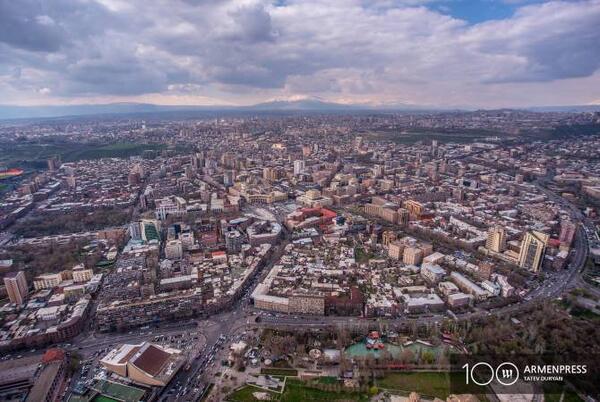
According to the Hydrometeorology Center, Yerevan is in the red zone for air pollution, and the most polluted cities after it are Vanadzor, Alaverdi and Gyumri. The main causes are large-scale construction, mining operations, vehicle emissions and open burning of waste, and dust concentrations in the air on some days exceed the norm by 3.5 times. Head of the Environmental Protection Department Armen Labladjyan noted that construction sites and improper transport of bulk materials make the largest contribution to the pollution, and recently 29 construction companies and 9 mines were fined millions of drams for violations. Despite the measures being taken, the situation remains difficult, and experts are calling for tougher environmental protection standards.
Air quality in Yerevan in August 2022:
In recent years, various cities across Armenia have shown a sustained trend of increasing incidents of air pollution exceeding the maximum permissible concentrations of harmful substances.
Air quality in Yerevan in August 2022:
Armenia's General Prosecutor's Office has drawn attention to air pollution. An investigation found that in Yerevan and several major cities, such as Gyumri and Vanadzor, there were multiple exceedances of the maximum permissible concentrations of pollutants.
Air quality in Yerevan in June 2022:
Read the full article on ecolur.org →
“Air in Armenia is polluted but has not yet reached dangerous levels” on ecolur.org →
The data showed that dust concentrations in the air of the Kentron district exceeded the maximum permissible concentration. Levels of nitrogen dioxide and sulfur dioxide did not exceed permissible limits.
Air quality in Yerevan in February 2022:
The Ministry of Environment proposes penalties for burning waste, including fines for citizens and officials. The initiative aims to improve air quality and protect the natural environment.
Air quality in Yerevan in April 2020:
Air pollution in Yerevan decreased during the state of emergency declared to prevent the spread of the coronavirus. The concentration of dust fell by 42% compared with the beginning of the month.
Air quality in Yerevan in April 2020:
Harmful emissions into the atmosphere are increasing annually in Armenia. The level of air pollution in Yerevan exceeds that of cities such as Moscow and Istanbul. As of 2019, PM2.5 concentrations in Yerevan reached 153 µg/m³, which significantly exceeds permissible limits.
Air quality in Yerevan in January 2020:
Read the full article on hetq.am →
“How polluted is the air we breathe in Yerevan” on ecolur.org →
In 2019 the level of dust in the air in Yerevan did not exceed the permissible limit. An exceedance was recorded only at the end of the year, which caused concern among environmentalists.
Air quality in Yerevan in January 2020:
UNDP Resident Representative in Armenia Dmitry Maryasin said that 9 out of 10 people worldwide are at risk from air pollution, highlighting the importance of discussing this issue.
Air quality in Yerevan in June 2019:
The information NGO Ecolur expresses support for the Yerevan municipality's initiative to restore the capital's green spaces, noting the loss of urban parks and forested areas in recent years and calling to restore Yerevan's status as a green and livable city.
Air quality in Yerevan in March 2019:
In Yerevan, on certain days of the year, atmospheric emission levels reach alarming values, especially during the evening hours. In 2016, exceedances of the maximum allowable concentrations of carbon monoxide (CO), sulfur dioxide (SO₂) and dust were recorded in the capital, posing a serious threat to public health.
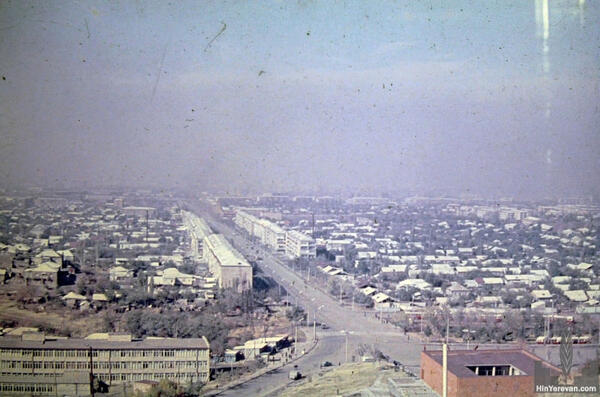
Yerevan, an ancient city and the capital of Soviet Armenia, suffers from smog that obscures the view of the biblical Mount Ararat. Although authorities have launched a campaign to reduce air pollution, the growth in private cars and emissions from factories have a significant impact. Plans include converting public transport to liquefied natural gas and relocating factories outside the city to improve air quality. However, restrictions on private car use remain controversial. The city has about 60,000 private cars, making it the leader in cars per capita among cities in the USSR. The city is actively increasing green spaces, adding 10 square meters per person over the past 10 years. The main sources of pollution are vehicle exhaust, factories, and adverse weather conditions during the winter period.